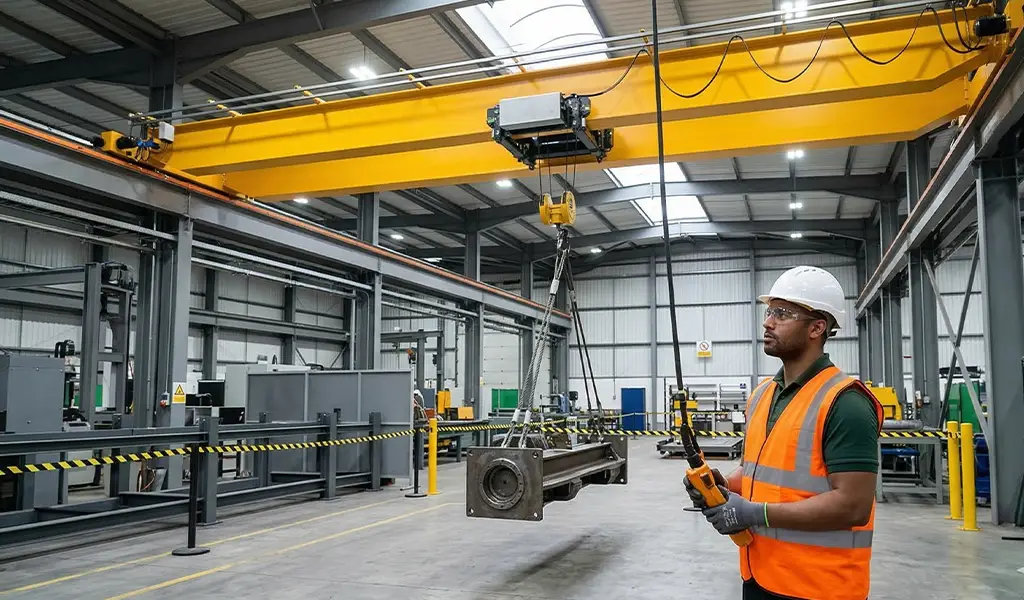
Because of the extreme forces involved, regulatory bodies classify overhead cranes as high-risk equipment. Operating a bridge crane, gantry crane, or jib crane safely requires far more than just knowing how to use the pendant controls; it demands a deep understanding of load dynamics, rigging hardware, and pre-shift inspections.
Mastering the Hoist and Hardware
The core of overhead crane training revolves around the lifting mechanism itself. The hoist is the central component that performs the actual lifting and lowering of the load using wire rope or heavy-duty chain. Operators must be trained to read the capacity charts specific to their hoist and bridge to ensure they never exceed the equipment's safe working limits. Pulling a load diagonally (side-pulling) is a common, dangerous mistake that stresses the hoist and can cause the load to swing violently once it breaks contact with the ground.
The Critical Role of Rigging and Slings
A crane is only as strong as the gear connecting it to the load. Proper rigging is an entire sub-discipline of crane operation that requires specialized knowledge.
- Selecting the Right Sling: Operators must know when to use a synthetic web sling (for delicate or easily scratched loads), a wire rope sling (for rugged, heavy-duty lifts), or an alloy steel chain sling (for high-temperature or abrasive environments).
- Working Load Limit (WLL): Every piece of rigging hardware, from the shackles to the hooks, has a WLL. Training teaches operators how to calculate the total weight of the load and select rigging gear that exceeds that weight.
- Understanding Sling Angles: This is where physics comes into play. As the angle of a sling decreases (meaning the sling becomes flatter and wider), the tension and stress on the legs of the sling increase exponentially. A load that a sling can safely carry at a 90-degree vertical angle might easily snap that same sling at a 30-degree angle.
Frequently Asked Questions
What is the difference between a hoist and a crane?
The hoist is the specific mechanical component that lifts and lowers the load vertically. The crane is the overall machine (including the bridge and trolley) that allows the hoist to move horizontally across a facility.
Do overhead crane operators need to be certified?
Yes. Occupational health and safety regulations mandate that only designated, properly trained, and evaluated personnel are permitted to operate overhead cranes and hoists.
How often should crane rigging be inspected?
A visual inspection of all rigging hardware (slings, hooks, shackles) must be performed by the operator before every single shift. A documented, thorough inspection by a competent professional is required at least annually.
What is a safe sling angle for lifting?
Safety standards highly recommend keeping sling angles greater than 45 degrees to the horizontal. Angles less than 30 degrees create massive, dangerous tension forces on the rigging and should be avoided.
Can you leave a suspended load unattended?
No. It is a strict violation of safety protocols for an operator to leave the crane controls while a load is suspended in the air. The load must be safely landed before the operator steps away.
Who is responsible for inspecting the crane before a shift?
The designated crane operator for that shift is responsible for completing the pre-operational daily checklist, which includes checking limit switches, wire rope condition, and pendant controls.
What is a tag line used for in rigging?
A tag line is a rope attached to the load being lifted. It allows a worker (the rigger or spotter) to control the spin and swing of the load from a safe distance without putting their hands directly on the suspended material.
What does WLL stand for in crane operation?
WLL stands for Working Load Limit. It is the maximum allowable weight that a specific piece of lifting equipment or rigging hardware is designed to safely handle under normal conditions.
Do you need specialized training to use synthetic slings?
Yes. While they are lighter and easier to handle, synthetic web slings are highly susceptible to cuts, chemical degradation, and UV damage. Operators must be trained specifically on how to inspect them and use edge protectors.
How long is overhead crane certification valid?
While rules vary by jurisdiction, best practices and most local safety authorities require crane operators to undergo refresher training and practical re-evaluation every three years.