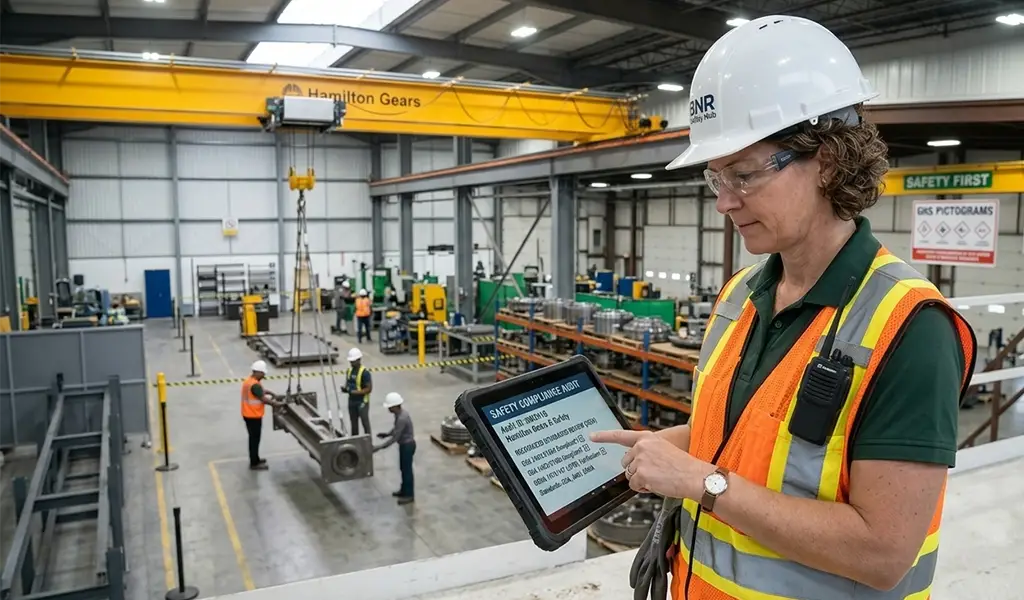
When you purchase safety equipment or book training for your employees, the provider will often claim their program meets "industry recognized standards." But what does that actually mean? To ensure true compliance, you need to understand the difference between the regulatory bodies that enforce the law, and the consensus organizations that write the technical rules.
Regulatory Bodies: The Law (CCOHS & OSHA)
These are the government agencies responsible for creating and enforcing workplace health and safety legislation. They have the power to conduct inspections, issue stop-work orders, and levy massive fines.
- CCOHS (Canada): The Canadian Centre for Occupational Health and Safety is the federal agency. However, in Canada, safety is largely enforced at the provincial level (e.g., the Ministry of Labour in Ontario). These provincial ministries set the strict legal requirements for employer duties, worker rights, and mandatory training.
- OSHA (United States): The Occupational Safety and Health Administration is the federal agency in the US. OSHA sets the overarching legal standards for workplace safety, which many private and international companies use as their baseline for safety protocols.
Consensus Organizations: The Technical Specs (CSA & ANSI)
Regulatory bodies like OSHA and the Ministry of Labour rarely write the technical engineering rules for how a harness should be stitched or how a forklift should be crash-tested. Instead, they "incorporate by reference" the standards written by independent consensus organizations.
- CSA Group (Canadian Standards Association): The CSA develops rigorous technical standards for everything from safety boots to fall arrest lanyards. When Ontario law states that a worker must use "appropriate fall protection," it legally requires that equipment to be CSA-certified.
- ANSI (American National Standards Institute): ANSI operates similarly in the US. They oversee the creation of voluntary consensus standards for products, services, and systems. Many OSHA regulations explicitly state that equipment must meet specific ANSI codes to be considered compliant.
Frequently Asked Questions
What does "compliant training" actually mean?
Compliant training means the curriculum explicitly covers all the legal requirements outlined by the local regulatory body (like OSHA or the Ministry of Labour) and adheres to the technical standards set by the CSA or ANSI.
Is OSHA recognized in Canada?
While OSHA is a US federal agency and holds no legal authority in Canada, many Canadian companies adopt OSHA standards as a best practice, especially if they operate internationally. However, Canadian worksites must ultimately comply with their specific provincial Ministry of Labour and CCOHS regulations.
What is the difference between ANSI and OSHA?
ANSI creates the technical specifications for how safety equipment should be built and tested. OSHA is the government agency that enforces the law, often making those ANSI specifications a legal requirement.
Does safety equipment have to be CSA approved?
In Canada, yes. If you are using personal protective equipment (PPE) like hard hats, safety boots, or fall arrest harnesses on a job site, it must carry the CSA mark to be legally compliant.
What is a "competent person" according to safety standards?
A competent person is defined by safety regulators as someone who, through knowledge, training, and experience, is qualified to organize the work safely, is familiar with the relevant laws, and can recognize potential hazards.
Can I use CE (European) marked safety equipment in North America?
Generally, no. While CE standards are rigorous, North American safety inspectors specifically look for CSA (in Canada) or ANSI/OSHA compliant labels. Using equipment without local certification can result in massive fines.
Who is responsible for ensuring standards are met?
The employer holds the primary legal responsibility (the "duty of care") to ensure that all equipment meets recognized standards and that all employees receive compliant training.
How often are safety standards updated?
Consensus standards (like CSA and ANSI) are typically reviewed and updated every 3 to 5 years to account for new technologies and industry best practices. Regulatory laws take much longer to change.
What happens if my company ignores recognized safety standards?
Ignoring standards can result in severe consequences, including stop-work orders, massive financial penalties, increased insurance premiums, and criminal prosecution if a worker is injured or killed.
How do I know if my safety trainer follows recognized standards?
Always ask a prospective safety trainer to provide their course syllabus and ask them explicitly which CSA/ANSI standards and local regulations their curriculum is based on. A reputable company will provide this immediately.